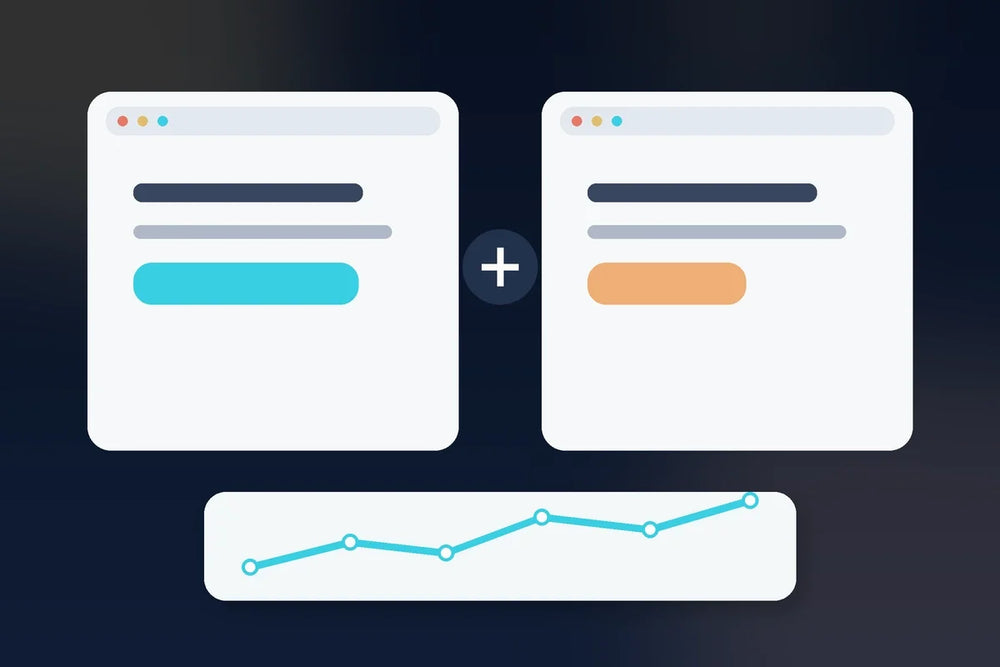
Small-business marketing often feels harder than it should for one simple reason: every task starts like a brand-new project.
You open AI and explain the business again. You open Canva and decide the visual direction again. You plan content without checking the current objective. You write a sales post without looking at the offer. You measure results without saving what you learned.
That is not a lack of effort. It is a lack of connection.
What is a marketing system?
A marketing system is a repeatable way to move from business information to a useful next action.
It connects the parts that are usually scattered:
BUSINESS CONTEXT → OBJECTIVE → PRIORITY → CONTENT → OFFER → CUSTOMER PATH → MEASUREMENT → LEARNING → NEXT ACTION.
The goal is not to make your business more complicated. The goal is to stop making the same decisions over and over.
Step 1: Create one source of truth for your business
Before you create more content, collect the information your marketing keeps needing.
- who your priority customer is
- what you sell
- your current prices and active offers
- your brand voice
- approved claims and proof
- your customer’s common questions
- your available assets
- your current constraints
This becomes the reference point for future work. Instead of asking, “What do we think our message is today?” you retrieve what has already been decided.
Step 2: Choose one current marketing objective
A system needs a destination.
Your current objective might be discovery, audience growth, leads, sales, appointments, launch support, retention, or re-engagement.
You may care about several of those at once. But your next action becomes clearer when one objective leads.
Trying to make every post, email, page, and campaign accomplish every goal at the same time usually creates weak marketing.
Step 3: Identify the real bottleneck
If sales are slow, do not immediately assume you need better content.
The problem may be discovery. Or clarity. Or trust. Or the checkout path. Or the offer. Or follow-up.
Start with the symptom, then investigate the system.
A symptom is not a diagnosis.
If people are not reaching the sales page, improving the checkout button may not matter yet. If people are reaching the sales page but leaving, creating more awareness content may not fix the leak.
Step 4: Give content a job
Content becomes easier when you stop asking only, “What should I post?” and start asking, “What does this piece need to do?”
Useful jobs include discovery, teaching, connection, proof, engagement, conversion, and retention.
For a deeper breakdown, read How to Create Content for Your Business.
Step 5: Reuse before you recreate
A good marketing system checks existing assets before producing something new.
Look at:
- blog articles
- emails
- FAQs
- customer questions
- old posts
- product descriptions
- course material
- past campaigns
- approved graphics and templates
Many businesses are sitting on useful material while continuing to create from a blank page.
Step 6: Build a repeatable weekly loop
Your weekly system does not need to be complicated.
- Choose one objective.
- Identify the priority customer.
- Check the current offer.
- Look for the biggest journey leak.
- Review available assets.
- Choose the next action.
- Create and publish.
- Measure what happened.
- Save what you learned.
Then the next week begins with more information than the week before.
Step 7: Separate observations from explanations
“Sales were lower this week” is an observation.
“People are tired of my brand” is an explanation—and it may be wrong.
Use a cleaner learning loop:
OBSERVATION → POSSIBLE EXPLANATION → TEST → LEARNING.
This prevents one disappointing result from triggering a complete rebrand, new offer, new platform, and new content strategy all at once.
The real advantage is continuity
The strongest system is not the one with the most dashboards. It is the one that remembers enough to keep moving.
When your customer information, offer details, brand rules, current objective, active assets, and recent learning remain connected, each new task becomes a continuation instead of a restart.
That is also why AI becomes much more useful when it works from consistent business context instead of a blank chat every time.
Start simple
You do not need to build every part in one day.
Start with one source of truth, one objective, one next action, and one review loop.
Then improve the system from real use.
Marketing gets lighter when the business stops forgetting what it already knows.
If you want a connected framework for organizing business context, choosing priorities, creating, launching, measuring, and carrying learning forward, explore The Plug-In Marketing Suite™.