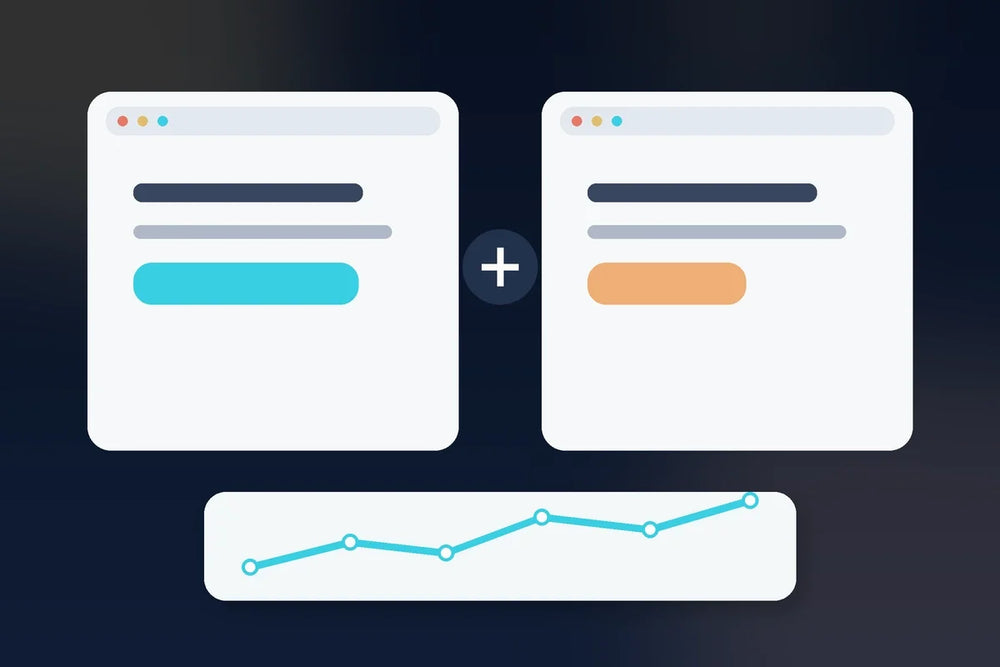
Email metrics are signals, not verdicts.
A dashboard can tell you what happened. It cannot automatically tell you why it happened or what the business should do next.
Start with the job of the email
An educational newsletter, sales email, onboarding message, appointment reminder, and re-engagement campaign should not all be judged by one identical metric.
Define the job first. Then choose the evidence that can tell you whether the message helped perform it.
Delivery
Delivery tells you whether the sending system is successfully reaching recipient mail servers.
Unexpected changes can signal list-quality, technical, or sender-reputation issues that deserve investigation.
Do not confuse “delivered” with “read.”
Opens
Open data can still be directionally useful in some contexts, but privacy and inbox technology can make it imperfect.
Do not treat the open rate as a precise measure of human attention or the final measure of business value.
Clicks
Clicks can show that someone took the next step inside the email.
Evaluate whether the link matched the email’s job. A click to an educational article means something different from a click to checkout.
Replies
Replies can be especially valuable for relationship-driven businesses.
They may reveal questions, objections, customer language, confusion, or genuine interest that a percentage cannot explain.
Unsubscribes
An unsubscribe is not automatically a disaster.
People change interests, needs, jobs, and inbox priorities. A clean exit is healthier than trapping someone in a list they no longer want.
Look for patterns when unsubscribes change sharply or repeatedly after certain types of sends.
Conversions
If the email supports a measurable business action, track what happens after the click when your tools allow it.
That may be a purchase, booking, download, registration, reply, or another defined next step.
Attribution is not always perfect, so use the data as evidence rather than pretending it proves every cause.
Revenue per send is not the only useful outcome
Email can also support retention, onboarding, education, customer success, and reduced support friction.
Measure the outcome that matches the job.
Segment the evidence when it matters
A new-subscriber sequence and an existing-customer campaign may perform differently because the audiences are in different contexts.
Use Email Segmentation for Small Business to keep comparisons meaningful.
Use a clean learning loop
Separate the parts:
OBSERVATION → POSSIBLE EXPLANATION → TEST → LEARNING.
Example:
- Observation: clicks declined across three newsletters.
- Possible explanation: the CTAs may be less relevant to the topics.
- Test: match each newsletter to one closely related next step.
- Learning: compare the next several sends before changing the entire strategy.
Avoid changing everything at once
If you change the audience, frequency, design, offer, subject line, CTA, and sending time in one test, you may improve performance without learning what helped.
Prioritize the variable most connected to the suspected problem.
Create a small dashboard
You do not need fifty metrics.
A simple review might include email/job, audience segment, delivery signal, clicks, replies, unsubscribes, primary conversion or next-step signal, observation, and next test.
Measure to decide what to do next
Analytics should reduce uncertainty, not create another pile of numbers.
At the end of a review, ask: What did we learn, and what is the next useful change?
For the larger framework, return to Email Marketing for Small Business: A Beginner’s Guide.