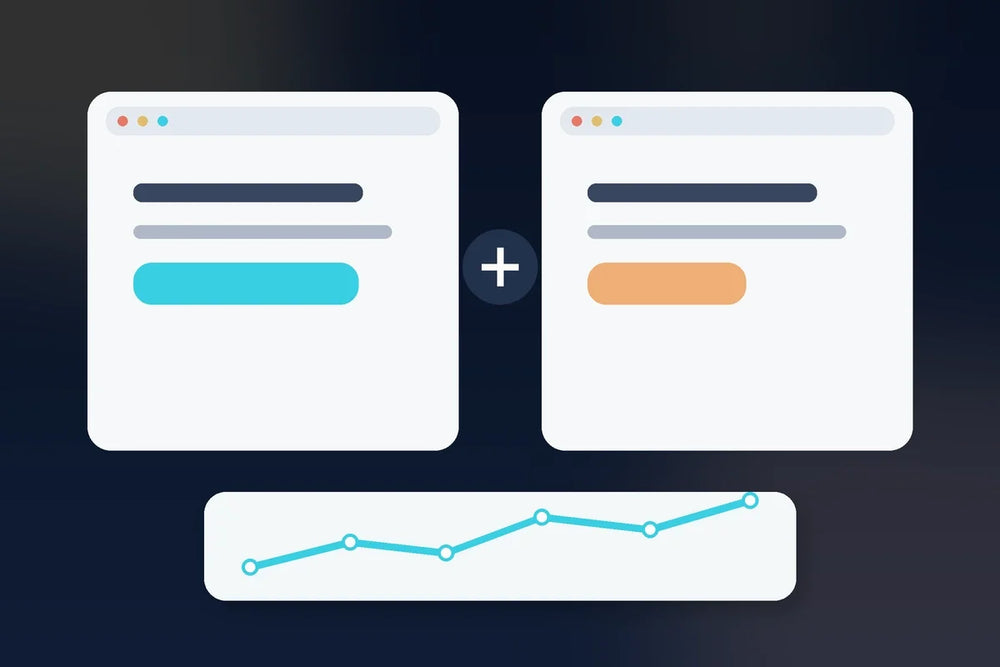
A marketing operating system is the connected way a business turns what it knows into marketing decisions, finished work, measured results, and better next decisions.
It is not one app. It is not a content calendar. It is not a prompt pack. It is not a giant folder of templates.
A useful marketing operating system answers a simple set of questions:
- What do we know about the business?
- What are we trying to accomplish right now?
- What needs attention first?
- What do we already have that can help?
- What should we create or execute next?
- What happened after we did it?
- What did we learn?
- What changes next?
For a small business, that can be the difference between “doing marketing” all week and actually operating marketing as a repeatable business function.
Why small-business marketing often feels harder than it should
Most small businesses do not have a complete lack of marketing information.
They have the opposite problem.
They have:
- saved posts,
- courses,
- templates,
- AI chats,
- Canva designs,
- email drafts,
- blog ideas,
- analytics dashboards,
- social media advice,
- notes from three different strategies.
The information exists. The connections do not.
That creates a familiar cycle:
Open a tool. Start over. Explain the business again. Create something. Publish it. Move on. Forget what happened. Start over again.
Eventually the owner begins to feel as if marketing itself is chaotic.
Often the deeper issue is that the marketing work has no shared operating system.
If that describes your business, read why your marketing feels random and how to build a system that connects.
What a marketing operating system is
A marketing operating system is the structure that connects six things:
- Business context — the facts the marketing must be built on.
- Strategy — the objective, customer, offer, constraints, and route.
- Creation — the content, campaigns, email, SEO, visuals, and conversion assets.
- Execution — publishing, launching, sending, distributing, and following through.
- Measurement — observing what happened.
- Learning — turning evidence into the next decision.
That last part is important.
A folder of templates can help you create. A dashboard can help you measure. An AI tool can help you draft. A marketing plan can help you choose a direction.
But a marketing operating system connects them so the output from one stage becomes useful input for the next.
Marketing system vs. marketing operating system
The terms are sometimes used loosely, but there is a useful distinction.
A marketing system can describe one repeatable process: an email welcome system, a lead-generation system, a content production system, or an SEO workflow.
A marketing operating system sits above those processes and helps them work together.
For example:
- Your SEO system identifies a useful search question.
- Your content system turns the question into a strong article.
- Your email system distributes the article.
- Your analytics system records what happened.
- Your strategy process decides whether the result changes the next priority.
Nothing needs to live inside one piece of software. The important part is that the business has a reliable operating logic.
For a broader starting point, see how to build a marketing system for a small business.
The 8 parts of a small-business marketing operating system
1. A business source of truth
Marketing cannot stay consistent if the underlying business facts are scattered or contradictory.
Your source of truth should include the information that downstream work needs most often:
- what the business sells,
- who the priority customer is,
- current offers and prices,
- brand voice and positioning,
- approved proof and claims,
- policies and guardrails,
- available channels and assets,
- current capacity and constraints.
This becomes even more important when AI is involved. AI can only reuse business context reliably if the context is available and current.
If you keep re-explaining your business to AI, use this guide on building reusable AI business context.
2. One current objective
A business can have many long-term goals. A marketing operating system still needs to know what deserves attention now.
The objective could be discovery, leads, appointments, launch, sales, retention, or re-engagement.
Without a current objective, every tactic looks equally urgent.
That is how a small business ends up redesigning Instagram graphics while the actual bottleneck is a broken checkout.
If priority is the problem, use this simple marketing priority framework.
3. A diagnostic layer
Good marketing systems do not confuse symptoms with causes.
“Sales dropped” is an observation.
It is not a diagnosis.
The cause might be lower traffic, weaker relevance, unclear value, a trust problem, purchase friction, seasonality, a technical issue, or something else.
CHECK THE MACHINERY BEFORE REWRITING THE MARKETING.
SYMPTOM ≠ DIAGNOSIS.
That discipline prevents a business from creating more content every time something goes wrong.
4. An asset-retrieval layer
Before creating something new, the system should ask what already exists.
Useful assets may include:
- published articles,
- customer FAQs,
- email sequences,
- brand language,
- approved proof,
- visual templates,
- campaign ideas,
- customer feedback,
- recent research.
Reuse is not laziness. It is operational memory.
A business that always creates from zero pays for the same thinking repeatedly.
5. Creation systems with defined jobs
Content, email, campaigns, SEO, design, and conversion work should not exist just because the calendar says something needs to be posted.
Every asset should have a job.
For content, useful jobs include:
- discover,
- teach,
- connect,
- prove,
- engage,
- convert,
- retain.
A content system becomes much easier to operate when the question changes from “What should I post?” to “What job does the business need this content to do?”
See what to create and why in a small-business content strategy.
6. Human approval rules
Automation and AI should not quietly turn recommendations into business truth.
Define what requires owner approval.
Common examples include:
- prices and promotions,
- claims and guarantees,
- public policy statements,
- major positioning changes,
- sensitive customer responses,
- permanent changes to stored business information.
AI assists. You own the business.
A system should reduce repeated decisions without hiding consequential ones.
7. Measurement that leads to a test
Analytics should answer more than “What were the numbers?”
A useful operating rhythm is:
OBSERVATION → POSSIBLE EXPLANATION → TEST → LEARNING
Suppose organic traffic rises after a series of related SEO articles.
The observation is that traffic rose.
The possible explanation might be stronger topical coverage, better search matching, improved internal links, seasonality, or several factors together.
The next move is not to declare a universal rule. It is to test what appears promising.
If analytics feels like a wall of numbers, read how to measure marketing without drowning in analytics.
8. A learning loop
This is what makes the system improve.
After execution, measured learning should return to the context used for future work.
That does not mean every result becomes a permanent fact.
Promote information carefully:
- one result may be an observation,
- repeated evidence may support a working hypothesis,
- consistent evidence across relevant situations may justify a stronger operating rule.
Without a learning loop, the business keeps collecting analytics but still starts every planning session from memory.
What a marketing operating system is not
It is not a giant software stack
You can build an operating system with a small set of tools. Buying more software does not make the process more connected.
It is not a content calendar
A calendar schedules output. An operating system decides whether that output should exist, what job it does, what business context it uses, and what happens after it publishes.
It is not a prompt collection
Prompts tell AI how to perform tasks. They do not automatically provide continuity across business context, strategy, approval, measurement, and learning.
For the AI-specific workflow, read the seven-step AI marketing workflow for small business.
It is not full automation
A good operating system can contain automation, but its purpose is not to remove human judgment.
If you are deciding what to automate, use this guide to marketing automation for small business.
It is not a document nobody uses
If the system only exists as a strategy document you read once, it is not operating anything.
The system has to participate in real work.
A simple example: organic SEO as part of the operating system
Imagine a small digital-product business that cannot afford paid ads and has limited social reach.
The current objective is qualified organic discovery.
A disconnected approach might look like this:
- ask AI for blog ideas,
- publish whatever sounds interesting,
- post links on social media,
- check traffic occasionally,
- repeat.
A marketing operating system would look different.
- Retrieve the priority customer and active offer.
- Review existing articles to avoid duplication and cannibalization.
- Identify a real customer question that fills a topical gap.
- Choose the search intent and article job.
- Write the article using approved context and useful internal links.
- Review for accuracy and usefulness.
- Publish and distribute.
- Measure impressions, clicks, engagement, and downstream behavior over time.
- Use the evidence to decide what to update, expand, interlink, or write next.
The blog is no longer a pile of posts. It is part of a learning system.
For more on that exact acquisition model, see how to build an SEO content strategy using real customer questions.
How AI changes the marketing operating system
AI makes operational continuity more valuable because it dramatically lowers the cost of producing drafts.
When output becomes cheap, deciding what deserves to be created becomes more important.
AI can help with:
- retrieving and summarizing business context,
- comparing current data with prior plans,
- drafting assets,
- repurposing approved content,
- diagnosing possible funnel leaks,
- organizing analytics,
- challenging assumptions,
- planning tests.
But AI still needs guardrails.
It should know when information is verified, when it is making a draft assumption, and when it genuinely does not know.
The best AI workflow does not pretend uncertainty disappeared. It handles uncertainty visibly.
How to build a marketing operating system without overwhelming yourself
Do not try to build everything at once.
Phase 1: centralize what the business knows
Create one reliable source for the facts marketing repeatedly needs.
Phase 2: choose one current objective
Stop asking the system to optimize the entire business at once.
Phase 3: connect one execution lane
Choose one lane that matters now: SEO, email, content, appointments, launch, or another route.
Phase 4: define measurement
Decide which observations will help you judge whether the lane is working.
Phase 5: add the learning loop
Record what the business should carry forward after execution.
Phase 6: add automation where the process is stable
Automate the predictable handoffs. Keep judgment visible.
If capacity is the limiting factor, CUT SCOPE BEFORE ADDING HOURS.
A weekly operating rhythm
A small business can run a surprisingly strong system with a short weekly rhythm.
1. Review the objective
Is it still the right priority?
2. Review evidence
What changed since last week?
3. Diagnose the biggest constraint
Where does the customer journey need attention?
4. Retrieve available assets
What can be reused instead of recreated?
5. Choose no more than three priorities
One meaningful week beats 15 half-started initiatives.
6. Execute
Create, send, publish, launch, or fix the work.
7. Record learning
What observation should affect next week?
Signs your business needs a marketing operating system
- You repeatedly explain the same business information to AI.
- Your content does not connect to a clear business objective.
- You have many resources but still do not know what to do next.
- Your tools contain conflicting information.
- You create new assets before checking what already exists.
- You react to weak results by changing everything at once.
- You collect analytics but rarely use them to make a decision.
- Your marketing plan disappears the moment the week gets busy.
- You cannot explain how learning from one campaign affects the next.
If several of those feel familiar, the solution may not be more marketing information.
It may be an operating structure.
Frequently asked questions
Do I need special software to build a marketing operating system?
No. You can begin with documents, spreadsheets, your existing marketing tools, and an AI assistant. The key is the operating logic and the shared source of truth.
Is a CRM a marketing operating system?
A CRM can be an important part of one, especially for customer and lead information, but it does not automatically connect every strategic, creative, analytical, and learning process.
Is an AI assistant a marketing operating system?
Not by itself. AI becomes part of the operating system when it works from approved context, follows the current strategy, uses existing assets, respects approval rules, and participates in measurement and learning.
Can a solo entrepreneur use this?
Yes. A solo business may benefit the most because the owner has limited attention and often carries business context in their head. A system makes that context reusable.
What should I build first?
Start with your business source of truth and one current objective. Then connect the execution lane that matters most right now.
The point is continuity
The value of a marketing operating system is not that it makes marketing complicated.
It makes complexity manageable.
Your business knows something. That knowledge informs a decision. The decision creates work. The work produces evidence. The evidence becomes learning. The learning improves the next decision.
That is continuity.
Stop collecting marketing. Start operating it.
If you want a ready-built framework designed around that complete cycle, The Plug-In Marketing Suite™ connects business context, strategy, AI workflows, content, campaigns, design, email, SEO, conversion, analytics, emergency diagnosis, and 90-day implementation into one system built to answer a deceptively powerful question: What should I do next?