A lead-generation funnel does not have to begin with ad spend. For a small business, the first version can be much simpler: useful attention comes in, interested people have a clear reason to identify themselves, and your business follows up with something relevant.
The important word is system. Random social posts, an email form, and a product page are not automatically a funnel just because they all exist.
Quick answer: what is the simplest organic lead-generation funnel?
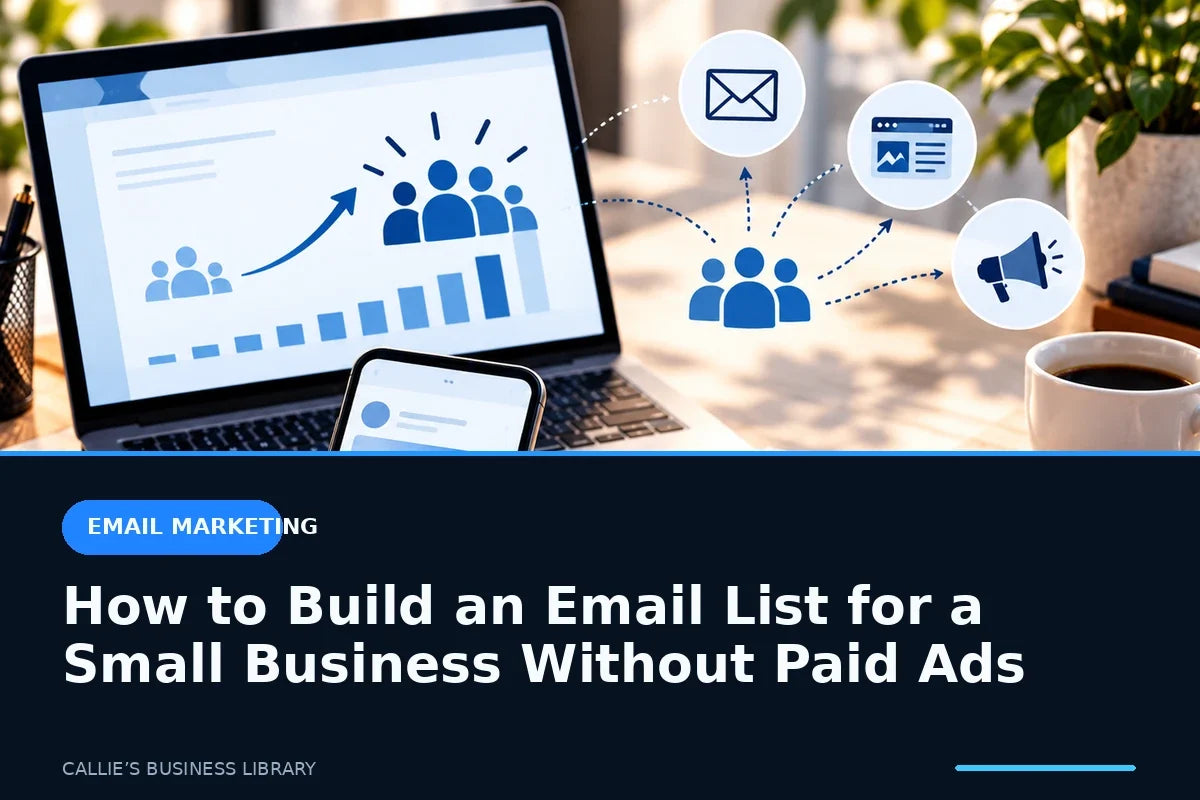
For many small businesses, the simplest version is useful content → focused signup page → valuable lead magnet → short welcome sequence → relevant offer. The goal is not complexity. It is a clear, permission-based path that turns useful attention into a relationship you can continue responsibly.
1. Choose one source of useful attention
Start with a channel you can maintain consistently: search-friendly blog content, social content, partnerships, communities where participation is appropriate, or an existing audience.
Do not try to master every channel at once. Your first goal is to prove that one path can move a person from discovery to the next step.
2. Give people a reason to opt in
“Join my newsletter” can work for an established brand, but a newer business often needs a more specific promise. A checklist, short guide, template, calculator, mini-course, or resource library can make the value of subscribing clearer.
If you need ideas, see Lead Magnet Ideas for Small Businesses.
3. Keep the signup page focused
The page should quickly answer:
- What will I receive?
- Who is it for?
- Why is it useful?
- What information do I need to provide?
For an early funnel, less friction is usually better. Collect only the information you actually need and handle subscriber data responsibly.
4. Deliver the promised value immediately
When someone subscribes, send what you promised. The first message should not make the person search for the download or wonder whether the signup worked.
Then use the next few messages to help them understand the problem, make progress, and learn what your business does. Do not jump from “here is your free guide” to aggressive sales messaging with no bridge.
5. Connect the lead magnet to the paid offer
The best lead-generation path has continuity. If your lead magnet helps someone identify a marketing problem, your follow-up should help them solve more of that problem. If your product solves an unrelated issue, the funnel will feel disconnected.
6. Track the handoffs
You do not need an advanced analytics stack to begin. Track the basic movement:
- How many people reach the signup page?
- How many subscribe?
- How many open or click the welcome content?
- How many visit the relevant offer?
- Where do people appear to stop?
Use those observations to improve one bottleneck at a time instead of rebuilding the whole funnel every week.
7. Earn consent—do not confuse a contact list with an email list
Lead generation should create permission-based relationships. A list of business contact addresses gathered for outreach is not the same thing as a list of people who subscribed to marketing email. Treat consent, applicable email rules, and subscriber expectations as part of the system from day one.
A prompt you can give The Plug-In Marketing Suite™
“Build a simple organic lead-generation funnel for my business using the information in my Business Knowledge Base. Use one primary traffic source, one lead magnet, one signup page, a short welcome sequence, and one relevant paid offer. Explain the job of every step, the CTA between steps, what I should measure, and where consent is required. Keep the plan realistic for a small business with no paid-ad budget.”
Review the plan before implementing it. Your actual email platform, privacy requirements, audience, and local laws may require additional steps.
Common questions about organic lead generation
Can a small business generate leads without paid ads?
Yes. Search content, social content, referrals, partnerships, communities, and an existing audience can all create organic discovery. The important part is giving interested people a clear, relevant next step.
What should I measure first in a simple funnel?
Measure the handoffs: traffic to the signup page, completed signups, engagement with the welcome content, visits to the relevant offer, and purchases or inquiries where applicable. This shows where the path is weakening.
Do I need a complicated email automation to start?
No. A short sequence that delivers the promised resource, provides useful follow-up, and introduces a relevant next step can be enough to test whether the path makes sense.
Related reading
Use What Makes a Lead Magnet Worth Downloading? 7 Practical Tests to strengthen the opt-in offer, then diagnose the next handoff with What to Tell The Plug-In Marketing Suite™ When Your Marketing Gets Attention but Not Leads.
The bottom line
You do not need a complicated funnel. You need a connected path that earns attention, offers value, gets permission to continue the relationship, and makes the next useful step obvious.
That connected approach is exactly what The Plug-In Marketing Suite™ is designed to support.