AI marketing can sound incredibly simple: use AI to write social posts, help with SEO, draft email, plan campaigns, analyze numbers, and create content ideas.
Then suddenly you have a dozen browser tabs open and you are spending more time managing your AI tools than marketing your business.
The Real Problem With AI Tool Overload
Small-business owners already have enough to remember: customers, products, orders, content, email, social media, website updates, SEO, promotions, and analytics.
When AI tools are added one at a time, every tool can create another place where information lives. You become responsible for remembering which tool does what, where the latest information is, what the AI already knows, what still needs to be finished, and what decisions were made previously.
Start With the Business, Not the Tool
A better AI marketing workflow begins with the business problem.
If your website is not converting visitors, for example, the first move should not automatically be writing a new sales page. Look at the current offer, the customer journey, the available evidence, the product page, and the point where momentum appears to stop.
That is fundamentally different from generating random marketing ideas.
One Connected Marketing Framework
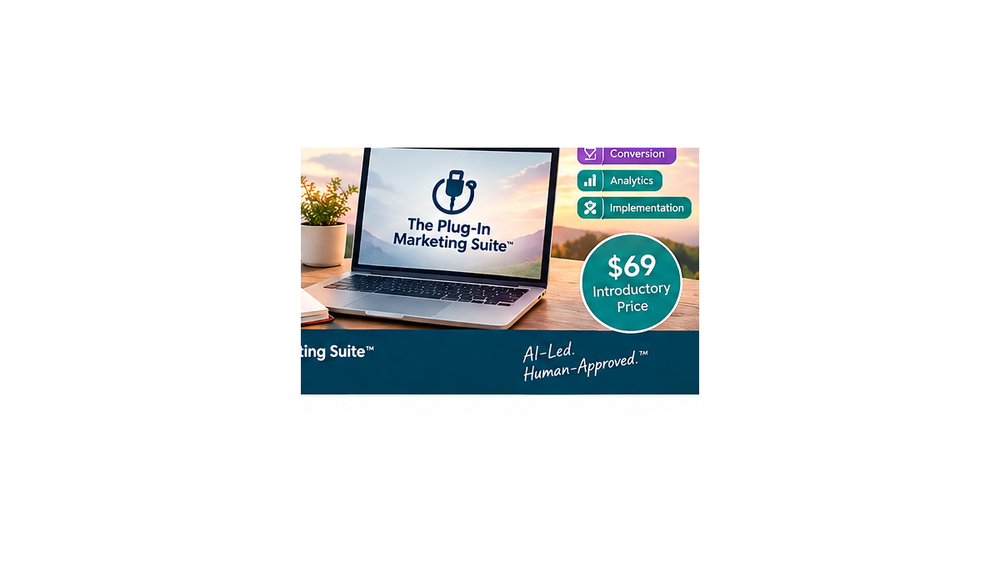
The Plug-In Marketing Suite™ is designed around this connected approach. It includes Business Brain™ for structured business knowledge and continuity, Next Move™ for prioritization, specialist modules, search and retrieval rules, tool-use governance, and workflows covering SEO, content, campaigns, email, conversion, analytics, and implementation.
The point is not to eliminate every other tool. The point is to give your AI a better operating framework for working with the tools you already use.
What Happens When Business Context Is Connected?
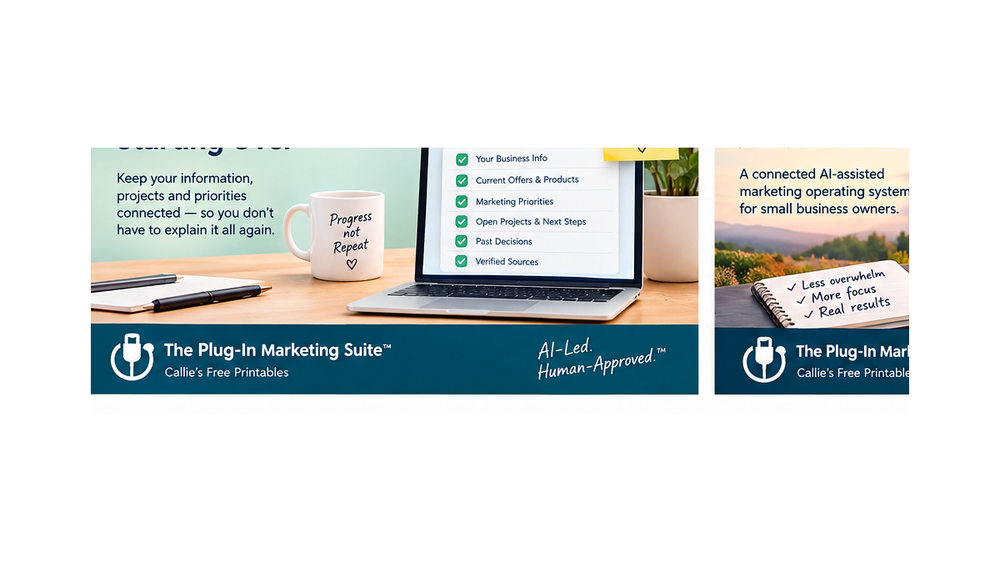
Instead of explaining your business from scratch, AI can work from established business information. Instead of immediately producing another piece of content, it can identify the larger objective. Instead of forgetting an unfinished task, it can carry the open loop forward.
Instead of assuming every action is authorized, the system can recognize where owner approval is required. Instead of declaring something finished because text was generated, it can verify whether the actual work was completed.
You Do Not Need to Become an AI Expert
The operating philosophy behind the Suite is Expert capability. Beginner operation. Sophisticated capabilities should be easier to use without requiring the owner to understand all the machinery underneath.
What Should You Look For?
- Business memory: Can it preserve important information?
- Search and retrieval: Can it use existing information?
- Prioritization: Can it help identify what matters next?
- Continuity: Can unfinished work remain visible?
- Tool governance: Does it distinguish between authorized work and actions requiring approval?
- Verification: Does it check whether work was actually completed?
Stop Collecting Tools. Start Connecting Work.
The goal is not necessarily to have fewer apps. It is to stop making your brain the integration layer.
See how The Plug-In Marketing Suite™ approaches connected AI marketing.