“Professional, friendly, authentic, and bold” sounds like a brand voice guide.
It usually is not enough to produce consistent writing.
Those words are too broad. Two people can interpret “bold” completely differently, and AI can too.
A useful brand voice guide explains how the brand actually communicates.
Start with how you want people to feel
Before choosing adjectives, decide what the communication experience should feel like.
Should the customer feel reassured, energized, respected, challenged, understood, informed, or calm?
This gives the voice a purpose beyond style.
Define what the voice does
Instead of saying “friendly,” describe the behavior.
For example:
- uses plain language instead of unnecessary jargon
- explains unfamiliar terms instead of assuming knowledge
- sounds energetic without shouting
- uses humor when it helps, not in serious situations
- does not use fake urgency
- does not make unsupported claims
Define what the voice avoids
Negative guidance can be extremely useful.
Examples:
- no corporate filler
- no patronizing language
- no fake testimonials
- no manufactured scarcity
- no vague motivational fluff
- no pretending certainty when something is a hypothesis
Give examples
AI performs better when the brand guide includes examples of good and bad phrasing.
Too generic: “Unlock your potential with our revolutionary solution.”
More specific: “If your marketing starts over every Monday, this system gives your business information somewhere permanent to live.”
The example teaches specificity, rhythm, and point of view.
Create reusable brand facts
Your voice guide should connect to approved business information such as:
- brand purpose
- customer description
- positioning
- approved claims
- offer language
- terms you use consistently
- terms you avoid
Voice is stronger when it is connected to business truth.
Use a voice checklist before publishing
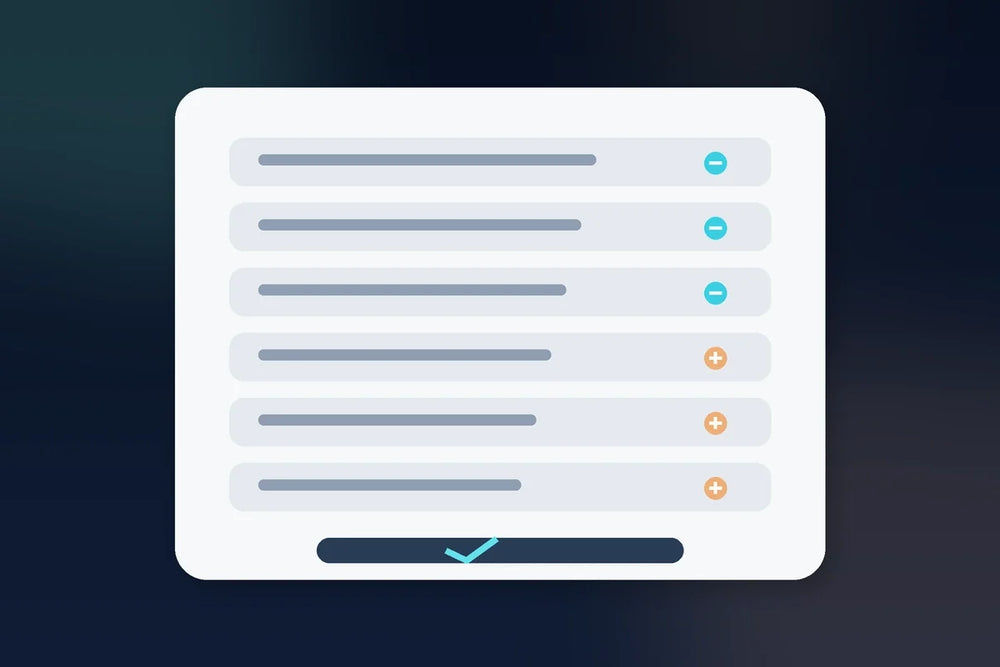
- Does this sound like us?
- Is the message clear before it is clever?
- Did we use approved facts?
- Did we avoid exaggerated claims?
- Would our intended customer understand it?
- Does the tone fit the situation?
Your AI needs rules, not vibes
A strong AI workflow should retrieve the brand guide before drafting and ask only when a missing answer would materially change the work.
If you are repeatedly re-explaining your business to AI, read How to Use AI for Marketing Without Repeating Your Business Information Every Time.
Brand voice is not a list of adjectives. It is a repeatable set of communication decisions.